Everyone says you need capital to start something of your own. Honestly? That’s not always true. I’ve watched people start a business with no money and still build something that pays their bills within a year. It’s not magic — it’s just a different playbook.
Most guides on this topic assume you have at least a small cushion. This one doesn’t. If your bank balance is embarrassing right now, keep reading.
Why “No Money” Doesn’t Mean “No Business”
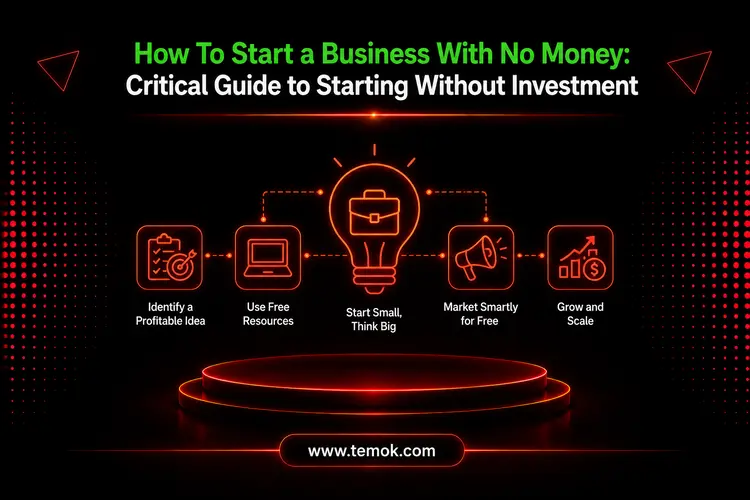
Here’s a quick answer for the skimmers: you can start a business with no money by selling a skill you already have, using free digital tools, and reinvesting your first earnings instead of spending on infrastructure upfront. Service-based businesses need almost zero capital compared to product businesses.
The trick is picking a model where your time substitutes for cash. Freelance writing, tutoring, social media management, small repair services — these all work.
Step 1: Sell What You Already Know
Before thinking about products or inventory, look at your own skillset. Can you write? Design? Fix laptops? Cook?
I’ve noticed most people underestimate a skill simply because it feels “normal” to them. It’s not normal to everyone. Someone in your city is willing to pay for exactly that thing you take for granted.
Step 2: Use Free Tools Instead of Paid Ones
You genuinely don’t need a fancy website on day one.
- A free Instagram business page can double as your storefront
- Google Forms can handle bookings or orders
- Canva’s free tier covers basic design work
- WhatsApp Business is enough for customer communication in most Indian markets
Spend zero on branding until you’ve made your first sale.
Step 3: Pre-Sell Before You Build
This is where most beginners go wrong — they build first, sell later. Flip it.
Picture a young graphic designer in Jaipur who wanted to launch a small design studio. Instead of buying software licenses upfront, she posted three sample designs on Instagram and asked people to DM her for orders. Two orders came in before she’d spent a single rupee on tools. She used that money to buy her first Canva Pro subscription.
Step 4: Barter and Trade Skills
Need a logo but can’t pay for one? Trade your skill for theirs. A friend who bakes traded three months of free cakes for a website built by a developer friend. Both walked away with something they needed.
Step 5: Use Government and Local Schemes
India has several schemes meant exactly for this situation — Mudra loans, Stand-Up India, and state-level MSME support programs offer low or zero-collateral funding for very small businesses. [link to related guide on small business loans here]
Step 6: Start Small, Scale Slower Than You Want To
There’s a temptation to grow fast once the first bit of money comes in. Resist it a little. Reinvest profits gradually rather than taking on debt too early.
Common Mistakes People Make
- Buying a domain and website before validating demand
- Registering a company structure before there’s any revenue
- Spending on ads before knowing what actually converts
- Trying to do everything alone instead of trading skills
FAQ
Can I really start a business with zero investment? Yes, especially service-based ones. Skills-based businesses like tutoring, freelance design, or content writing need almost no starting capital — just time and consistency.
What’s the fastest business to start with no money? Freelancing in a skill you already have — writing, editing, social media, or basic tech support — usually gets your first client within days, not months.
Do I need to register my business immediately? Not necessarily. Many people operate informally for the first few months and register once there’s steady income and a real need for it.
Is dropshipping a no-money business? It’s low-money, not no-money. You’ll still need something for ads and a basic storefront tool, even if it’s a small amount.
How do I get my first customer with no marketing budget? Word of mouth, local WhatsApp groups, and Instagram Reels showing your work in action — all free and surprisingly effective for local businesses.
Conclusion
Starting with empty pockets isn’t ideal, but it’s not the dead end people think it is either. The businesses that survive long-term usually start lean anyway — it forces discipline. If you’re serious about this, pick one skill today, post it publicly, and see who responds before you spend a single rupee on anything else.