Most businesses don’t fail at marketing because they lack budget — they fail because they never had a clear marketing strategy to begin with. They just run random ads and hope something sticks.
Quick Answer
A working marketing strategy starts with clearly defining your target audience, choosing 2-3 channels that actually reach them, setting measurable goals, and reviewing performance data regularly to adjust course rather than sticking rigidly to an initial plan.
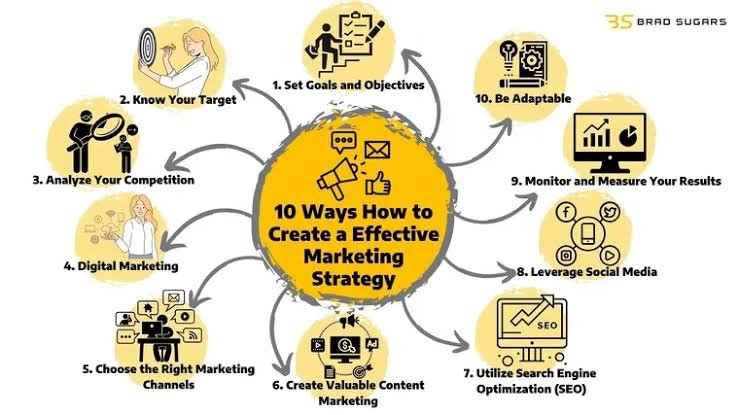
1. Define Your Actual Target Audience
“Everyone” is not a target audience. The more specific you get — age, income bracket, specific pain points, buying behavior — the easier every other marketing decision becomes.
I’ve noticed businesses that skip this step end up creating content that appeals to nobody in particular, which is worse than appealing strongly to a smaller, well-defined group.
2. Set Clear, Measurable Goals
“Increase brand awareness” isn’t measurable. “Get 500 qualified leads in Q3” is. Specific goals let you actually judge whether your marketing strategy is working or just generating activity.
3. Pick 2-3 Channels, Not Fifteen
Trying to be everywhere — Instagram, LinkedIn, YouTube, email, ads, SEO — all at once usually means doing everything poorly. Pick the channels where your specific audience actually spends time, and go deep there first.
Picture a B2B consulting firm that tried running Instagram, Facebook, LinkedIn, and email campaigns simultaneously with a small team. Results were mediocre across the board. They cut down to just LinkedIn and email, going much deeper on both, and lead quality improved significantly within two months.
4. Build a Consistent Content Calendar
Random, sporadic posting rarely builds momentum. A simple content calendar — even a basic spreadsheet — keeps your messaging consistent and prevents last-minute scrambling.
5. Understand Your Competitive Positioning
What makes your offer genuinely different from competitors? If you can’t answer this clearly, your marketing messaging will feel generic no matter how much you spend on ads.
6. Track Data and Adjust Regularly
A marketing strategy isn’t a set-and-forget document. Review performance monthly — what’s actually converting, what’s just generating vanity metrics like likes without real business impact.
Building Your Marketing Funnel
- Awareness — Getting your target audience to notice you exist (social content, ads, SEO)
- Consideration — Building trust through case studies, testimonials, free resources
- Decision — Clear, low-friction calls to action (demos, free trials, consultations)
- Retention — Ongoing communication that keeps existing customers engaged and referring others
Common Marketing Strategy Mistakes
- Copying competitor tactics without understanding your own audience’s specific needs
- Chasing every new platform trend instead of mastering a few channels well
- Measuring vanity metrics (likes, followers) instead of actual business outcomes
- No clear budget allocation tied to measurable goals
FAQ
How much should a small business spend on marketing? It varies by industry, but many small businesses allocate somewhere between 5-12% of revenue toward marketing, adjusting based on growth goals.
What’s the difference between a marketing strategy and a marketing plan? Strategy is the overall direction and reasoning behind your approach; the plan is the specific, tactical execution of that strategy.
How long does it take to see results from a new marketing strategy? Generally three to six months for meaningful results, though paid channels can show faster, more immediate signals.
Should small businesses focus on organic or paid marketing first? It depends on urgency and budget — paid channels give faster results, while organic builds more sustainable, long-term traffic.
How do I know if my marketing strategy is actually working? Track specific, measurable goals tied to business outcomes — leads, conversions, revenue — rather than just engagement numbers alone.
Conclusion
A working marketing strategy isn’t about doing more — it’s about doing the right few things consistently, backed by a clear understanding of who you’re actually talking to. Define your audience, pick your channels deliberately, and review your data honestly every month.