Project managers argue about this constantly, sometimes a little too passionately for what’s ultimately a practical question. The agile vs waterfall debate isn’t about which method is objectively better — it’s about which one fits your specific project.
Straight Answer
In the agile vs waterfall comparison: Waterfall works best for projects with fixed, well-understood requirements and low expected change, while Agile suits projects where requirements evolve and quick, iterative delivery matters more than a rigid plan.
What Is Waterfall, Really?
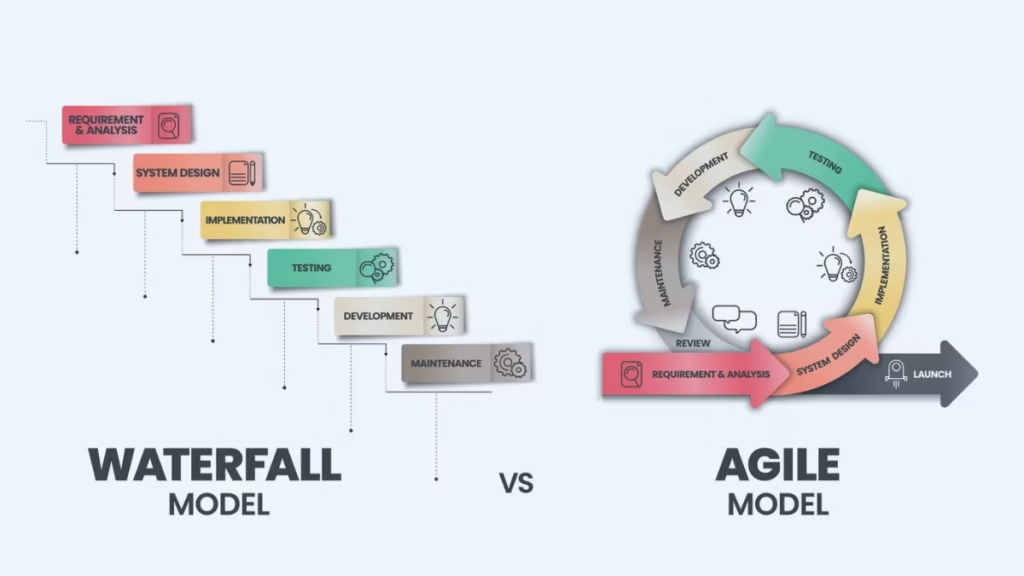
Waterfall follows a strict sequence — requirements, design, development, testing, deployment — each phase completed before the next begins. It’s predictable and easy to plan budgets around, but painfully rigid if requirements shift midway.
What Is Agile, Really?
Agile breaks work into short cycles (sprints), delivering usable pieces of the product repeatedly and adjusting based on feedback. It’s flexible, but that flexibility can turn into scope creep without strong discipline.
Key Differences at a Glance
- Planning: Waterfall plans everything upfront; Agile plans in short, rolling cycles
- Change tolerance: Waterfall struggles with mid-project changes; Agile expects and absorbs them
- Client involvement: Waterfall involves clients mainly at the start and end; Agile involves them continuously
- Delivery: Waterfall delivers one final product; Agile delivers working increments repeatedly
I’ve noticed teams often pick a method because it’s trendy (everyone loves saying “we’re agile”) rather than because it actually fits their project’s nature. That’s a mistake worth avoiding.
When Waterfall Actually Makes Sense
Picture a construction-adjacent software project — building compliance software for a bank with fixed regulatory requirements. Requirements aren’t going to change mid-project; they’re mandated by law. Waterfall’s rigid, sequential structure fits perfectly here, since there’s little value in iterating on something that’s already fixed.
When Agile Actually Makes Sense
Now picture a startup building a consumer app where user feedback will genuinely shape features over time. Locking requirements upfront, Waterfall-style, would mean building things nobody ends up wanting. Agile’s iterative releases let the team adjust based on real user behavior every few weeks.
Hybrid Approaches Exist Too
Many real-world teams use a blend — Waterfall for overall project phases and budgeting, with Agile sprints within the development phase itself. This isn’t cheating; it’s often the most practical answer for complex projects with some fixed and some flexible elements.
Choosing the Right Method for Your Project
- How likely are requirements to change mid-project?
- How involved can/should the client be throughout?
- Is speed-to-market or upfront predictability more critical?
- Does your team have experience running Agile sprints effectively?
FAQ
Is Agile always better than Waterfall? No — Agile suits evolving projects well, but Waterfall remains genuinely better for fixed-scope, compliance-heavy, or highly predictable projects.
Can a team use both Agile and Waterfall together? Yes, hybrid models are common, especially in larger organizations managing both fixed infrastructure work and evolving product features.
Which method is easier for beginners to manage? Waterfall is generally easier to grasp initially since it’s linear, while Agile requires more discipline around iteration and prioritization.
Does Agile mean no planning at all? No — Agile still involves planning, just in shorter, rolling cycles rather than one big upfront plan for the entire project.
Is Waterfall outdated for software development? Not entirely — it still works well for specific project types, particularly those with strict regulatory or contractual requirements.
Conclusion
The agile vs waterfall question isn’t really about picking a winner — it’s about matching the method to your project’s actual nature. Fixed, predictable scope leans Waterfall; evolving, feedback-driven work leans Agile. Choose based on your project, not based on which term sounds more modern.