Most homeowners don’t think much about their water treatment system until something goes wrong. The water starts tasting different, a softener seems less effective, or a filter that should be working quietly in the background suddenly becomes a source of frustration. It’s usually at that point that we start looking for answers.
The good news is that many water treatment problems can be prevented, or at least caught early, with a little attention. You don’t need to understand every valve, pipe, and setting in your home. What matters is knowing the basics, recognizing changes, and understanding when a problem calls for professional help.
Small Changes Can Tell You a Lot
Water treatment equipment is designed to make everyday life easier, but it doesn’t operate in isolation. Water quality, household consumption, installation conditions, and routine maintenance all affect how well a system performs.
Perhaps you’ve noticed white spots on your glasses even though your water softener is running. Maybe your drinking water has developed an unusual taste, or the water pressure at the kitchen tap seems lower than usual. These symptoms don’t automatically mean the equipment has failed. A clogged filter, incorrect setting, depleted supply of salt, or change in the incoming water could be responsible.
Before taking anything apart, pay attention to what has changed and when it started. Is the problem affecting every tap or just one? Does it happen throughout the day, or only when several appliances are running? A few observations can make a service visit more productive and help prevent unnecessary repairs.
Understanding Common Equipment Problems
Water treatment systems contain components that gradually wear, collect deposits, or need occasional adjustment. Even a well-made unit requires some attention over its working life.
For example, filters trap sediment and other substances according to their design. As they approach the end of their rated service life, water flow may decrease or performance may decline. A reverse osmosis system can also develop problems involving its membrane, storage tank, tubing, or pressure. A softener, meanwhile, may struggle if its salt supply runs low or the regeneration cycle isn’t working properly.
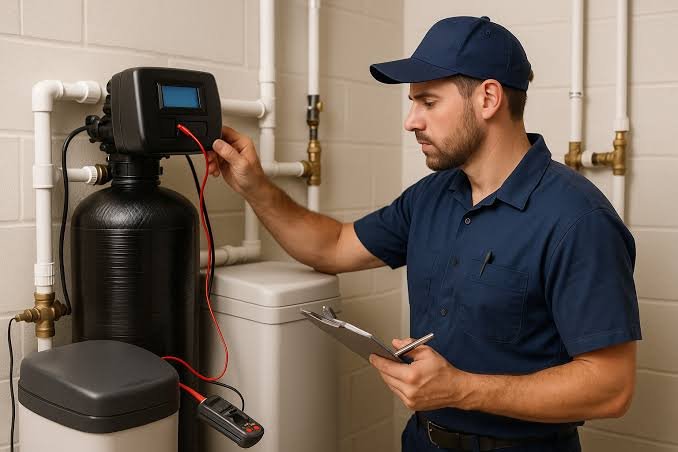
When something seems wrong, system troubleshooting should begin with simple, safe checks. Look for visible leaks, review the manufacturer’s instructions, and check whether the unit displays an error code or warning light. If the equipment uses salt, confirm that the level is appropriate and that the manufacturer’s guidance doesn’t indicate a bridging or blockage problem.
Avoid opening pressurized components or handling electrical parts unless you’re qualified to do so. Some systems include automatic valves, pumps, or electrical controls that shouldn’t be adjusted casually. If the cause isn’t obvious, getting help early is generally cheaper than turning a small fault into a bigger one.
Don’t Ignore the Settings
Water treatment systems aren’t always set correctly just because they were installed by a professional. Household needs can change, and settings that worked well for a previous owner may not suit the people living in the property now.
A softener, for instance, may need to be programmed according to measured water hardness and the household’s typical water use. If its settings are inappropriate, it could regenerate too often, use more salt than necessary, or fail to provide the expected results. Other systems may have flow controls, filter-life indicators, or operating modes that deserve an occasional review.
Routine efficiency checks and settings adjustments can help keep equipment working as intended. The aim isn’t to change settings constantly; it’s to confirm that the system matches your actual needs. Check the manual for recommended intervals, and record any changes so you can identify what helped if a problem returns.
Energy use, water waste, and replacement costs also deserve attention. Some systems use water during cleaning or regeneration, while reverse osmosis units send some water to a drain. Performance varies by model and operating conditions, so consult the manufacturer’s specifications rather than assuming every system works the same way.
A Water Softener Needs More Than Salt
Hard water is one of the most common reasons homeowners install treatment equipment. Calcium and magnesium can leave stubborn deposits on taps, shower screens, and appliances. Over time, scale may also affect heating efficiency and contribute to maintenance problems in plumbing systems.
A water softener can reduce these hardness minerals through an ion-exchange process. However, adding salt whenever the tank looks low isn’t the whole maintenance routine. The unit also needs suitable programming, a functioning regeneration cycle, and occasional checks according to the manufacturer’s recommendations.
Use the salt type specified for your model, and avoid filling the brine tank beyond the recommended level. If salt forms a hard crust or bridge, the system may not draw brine properly. Don’t break up a blockage with sharp tools or force internal components; follow the manual’s instructions or contact a service technician.
It’s also worth remembering that softened water isn’t the same as purified water. A conventional softener is designed primarily to address hardness, not to remove every contaminant that might affect drinking water. If your household has concerns about bacteria, lead, nitrates, or other substances, testing and appropriately certified treatment equipment are more suitable ways to address them.
Make Maintenance Part of the Routine
Maintenance is easier when it becomes a small, predictable household task rather than an emergency response. Keep a note of filter replacement dates, service appointments, and any changes in water quality. If your system has a maintenance indicator, use it as a reminder, while still following the schedule provided by the manufacturer.
Replacement intervals depend on the equipment and the water passing through it. A sediment filter in a home with heavy sediment may need attention sooner than one installed on a cleaner supply. Reverse osmosis membranes also have different service lives depending on usage, water chemistry, and the model itself.
Don’t forget sanitation where it’s recommended. Drinking water systems may require specific cleaning procedures when filters are replaced or components are serviced. Follow the manufacturer’s directions carefully, especially when disinfectants are involved. Using the wrong product or concentration can damage equipment or leave water unsuitable for use until the system has been properly flushed.
If you rely on a private well, periodic water testing is particularly important. A treatment unit can perform normally while the source water changes, so maintenance alone cannot guarantee that your water remains safe.
Know When to Call a Professional
Some issues are easy to spot but difficult to diagnose. Persistent leaks, recurring error messages, sudden pressure changes, unusual noises, and a noticeable decline in treatment performance all deserve attention if basic checks don’t resolve them.
Choose a technician who can explain the problem in plain language and provide a clear estimate before carrying out substantial repairs. Ask whether replacement parts are readily available and whether the proposed work is covered by a warranty. If the technician recommends replacing the entire system, it’s reasonable to ask why repair isn’t practical and how the new equipment would address the original problem.
A reliable service provider won’t promise that one product can solve every water quality concern. Instead, they should consider your water test results, existing equipment, household usage, and budget before recommending a course of action.
Better Water Starts With Consistent Care
Water treatment doesn’t need to become another complicated responsibility on your to-do list. A little observation, sensible maintenance, and occasional professional support can go a long way toward keeping equipment reliable.
Start by learning what your system is designed to do and what it cannot do. Follow the maintenance schedule, pay attention to changes in taste or flow, and avoid making adjustments you’re not comfortable handling. When a problem persists, seek qualified help rather than relying on guesswork.
Most importantly, remember that the goal isn’t simply to keep a machine running. It’s to maintain water quality that suits your household and equipment that performs as expected. With a practical approach and a bit of consistency, you can avoid many unnecessary headaches and enjoy greater confidence in the water you use every day.