Corporate governance is one of those terms that makes people’s eyes glaze over in board meetings, right up until a scandal happens and everyone suddenly cares a lot. Let’s talk about why it actually matters, in plain terms.
Quick Definition
Corporate governance refers to the system of rules, practices, and processes that direct and control a company — covering everything from board structure to shareholder rights to financial transparency and accountability.
Why Governance Isn’t Just a Big-Company Problem
Small and mid-sized businesses often assume governance frameworks are only for listed giants. That’s a mistake. Poor governance in a growing startup — vague ownership structures, no clear decision rights, weak financial oversight — creates exactly the same problems, just at a smaller scale, and they compound as the company grows.
Key Pillars of Corporate Governance
- Board structure and independence — A board with genuine independent oversight, not just friends and family rubber-stamping decisions
- Transparency in financial reporting — Accurate, timely disclosure of financial health to stakeholders [link to related guide on basic accounting principles here]
- Shareholder rights — Clear processes for how shareholders are informed and consulted on major decisions
- Risk management — Systems in place to identify and address business risks before they become crises
- Accountability structures — Clear lines of responsibility so decisions can be traced back to specific people
Why Poor Governance Causes Real Damage
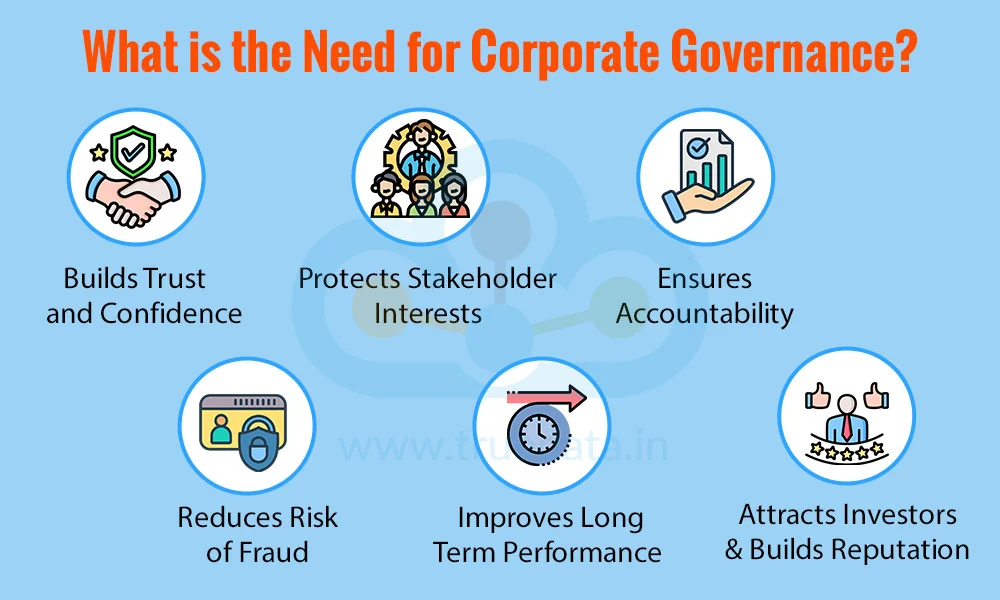
Picture a fast-growing startup that raised significant funding but never formalized its board processes or financial controls. When a founder made a major spending decision unilaterally, investors discovered it only during a routine audit months later. Trust broke down fast, and the next funding round nearly collapsed as a result. Good governance would’ve caught this early through simple reporting structures.
Corporate Governance and Investor Confidence
Investors — whether angel, VC, or public market — pay close attention to governance because it signals how the company will behave when things get difficult, not just when everything’s going well. Weak governance is often a red flag even when the business itself looks promising on paper.
Building Governance Into a Growing Company
- Formalize board meetings with actual minutes and action items, even for small boards
- Separate personal and company finances completely, always
- Create clear approval thresholds for spending decisions
- Bring in an independent advisor or board member earlier than feels necessary
Common Governance Mistakes Startups Make
- Treating the founder’s word as the only “process” needed
- Delaying financial audits until investors force the issue
- Mixing personal expenses with business accounts
- No documented decision-making process for major choices
FAQ
Is corporate governance only relevant for publicly listed companies? No — private companies and even early-stage startups benefit significantly from basic governance structures as they scale.
What’s the difference between management and corporate governance? Management runs daily operations; governance oversees and holds management accountable at a structural level.
Do small businesses need a formal board for good governance? Not necessarily a full board, but even an informal advisory group with real oversight helps significantly.
How does poor governance affect fundraising? Investors often view weak governance as a major risk signal, sometimes enough to walk away from an otherwise strong deal.
What’s the easiest first step toward better governance? Separate personal and business finances completely, and start documenting major decisions formally, even in a simple shared document.
Conclusion
Corporate governance isn’t just paperwork for big listed companies — it’s a protective structure every serious business benefits from, regardless of size. Start small: formalize your decision-making, separate your finances properly, and bring in outside perspective before you’re forced to by a crisis.