Every new founder eventually hits this wall — you’ve got a decent idea, maybe some early traction, and now you need money to grow. The good news is there are more startup funding options available today than there were even five years ago.
Quick Overview
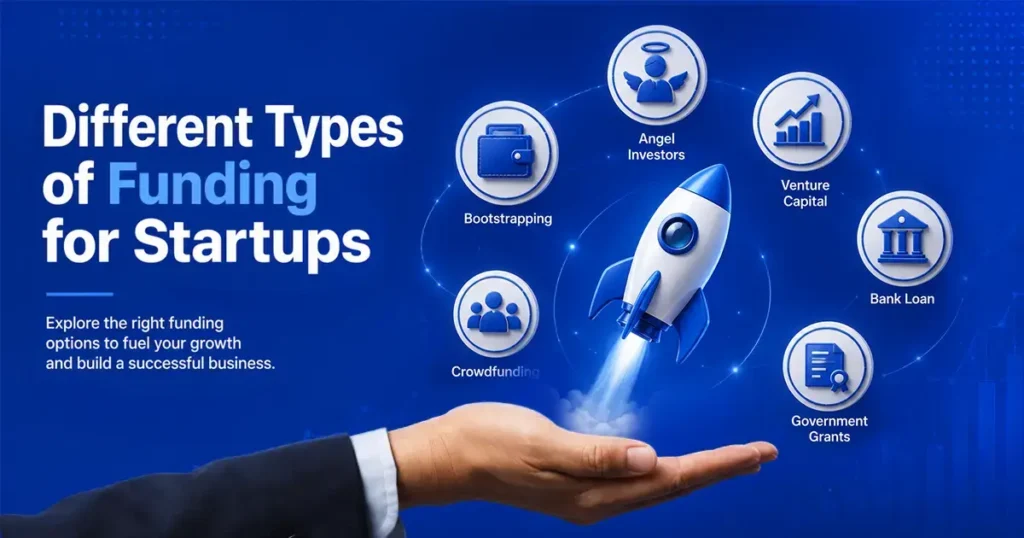
If you’re short on time: the main startup funding options are bootstrapping, angel investors, venture capital, government schemes, crowdfunding, and bank loans — each suited to a different stage and risk appetite.
1. Bootstrapping
This means funding your business from your own savings or early revenue. It’s slow, but you keep full ownership and control.
I personally lean toward this route when possible — it forces discipline, and you’re not answerable to anyone else’s timeline. That said, it’s not realistic for capital-heavy businesses like manufacturing or deep tech.
2. Friends and Family
Common in the very early stage. Fast to access, but it comes with emotional baggage if things go wrong. Keep it formal — written agreements, clear terms — even with people you trust.
3. Angel Investors
Individuals who invest their own money, usually in exchange for equity, often at the seed stage. They typically bring more than money — mentorship, industry contacts, and credibility.
Picture a small edtech founder in Pune who raised ₹40 lakh from two angel investors, both former founders themselves. The money mattered, sure, but their introductions to school networks mattered just as much.
4. Venture Capital (VC)
VCs invest larger amounts in exchange for equity, usually once there’s some proven traction. They expect high growth and a clear path to scale — this isn’t the route for a lifestyle business.
- Typically comes in rounds: seed, Series A, Series B, and beyond
- Expect due diligence, term sheets, and board involvement
- Best suited for businesses aiming for rapid, large-scale growth
5. Government Schemes and Grants
India has a decent number of these — Startup India Seed Fund, SIDBI schemes, and state-level startup grants. They’re competitive but come with no equity dilution, which is a big plus.
6. Crowdfunding
Platforms let you raise smaller amounts from a large number of people, often in exchange for early product access or rewards rather than equity. Works well for consumer products with a good story.
7. Bank Loans and NBFCs
Traditional but still relevant, especially for businesses with predictable revenue. Interest rates and collateral requirements vary quite a bit, so shop around before committing. [link to related guide on small business loans here]
Which One Should You Choose?
- Testing an idea with low capital needs → bootstrap
- Need mentorship plus early capital → angel investors
- Proven traction, need to scale fast → VC
- Want funding without giving up equity → government schemes
- Consumer product with community appeal → crowdfunding
FAQ
What’s the easiest startup funding option to access? Bootstrapping and friends-and-family funding are usually the quickest, though they come with their own limitations.
Do I need a registered company to raise from angel investors? Yes, most investors will require a proper legal entity, usually a private limited company, before writing a cheque.
How much equity do angel investors usually take? It varies widely, but early rounds often range between 5-20% depending on valuation and amount raised.
Are government startup grants hard to get? They’re competitive and require solid documentation, but they’re worth applying for since there’s no equity dilution involved.
Is venture capital right for every startup? No. VCs expect high growth and eventual big exits — not every business model fits that expectation, and that’s completely fine.
Conclusion
There’s no single “best” option among these startup funding routes — it depends entirely on your stage, industry, and how much control you’re willing to share. Start with what’s accessible now, and don’t chase VC money just because it sounds impressive. The right funding fits your business model, not the other way around.